
Make the Invisible Understandable

Overview
When the Army Aviation Museum approached us, the challenge was not just technical. It was experiential. Night Vision Goggles are not something you can explain on a sign. They are something you feel. The tunnel vision, the limited depth perception, and the pressure of navigating in near total darkness all had to be translated into something visitors could understand instantly.
The goal was to create an interactive exhibit that works for everyone, from children and first time visitors to experienced aviators, while holding up in a high traffic museum environment. This meant turning a highly technical and sensory experience into something intuitive, engaging a broad audience without oversimplifying, and reflecting the collaborative nature of real world aviation.
At the same time, the experience needed to be durable, reliable, and easy to step into without guidance. Most importantly, it had to teach through interaction, not instruction.



A Collaborative, Mission Based Game Experience

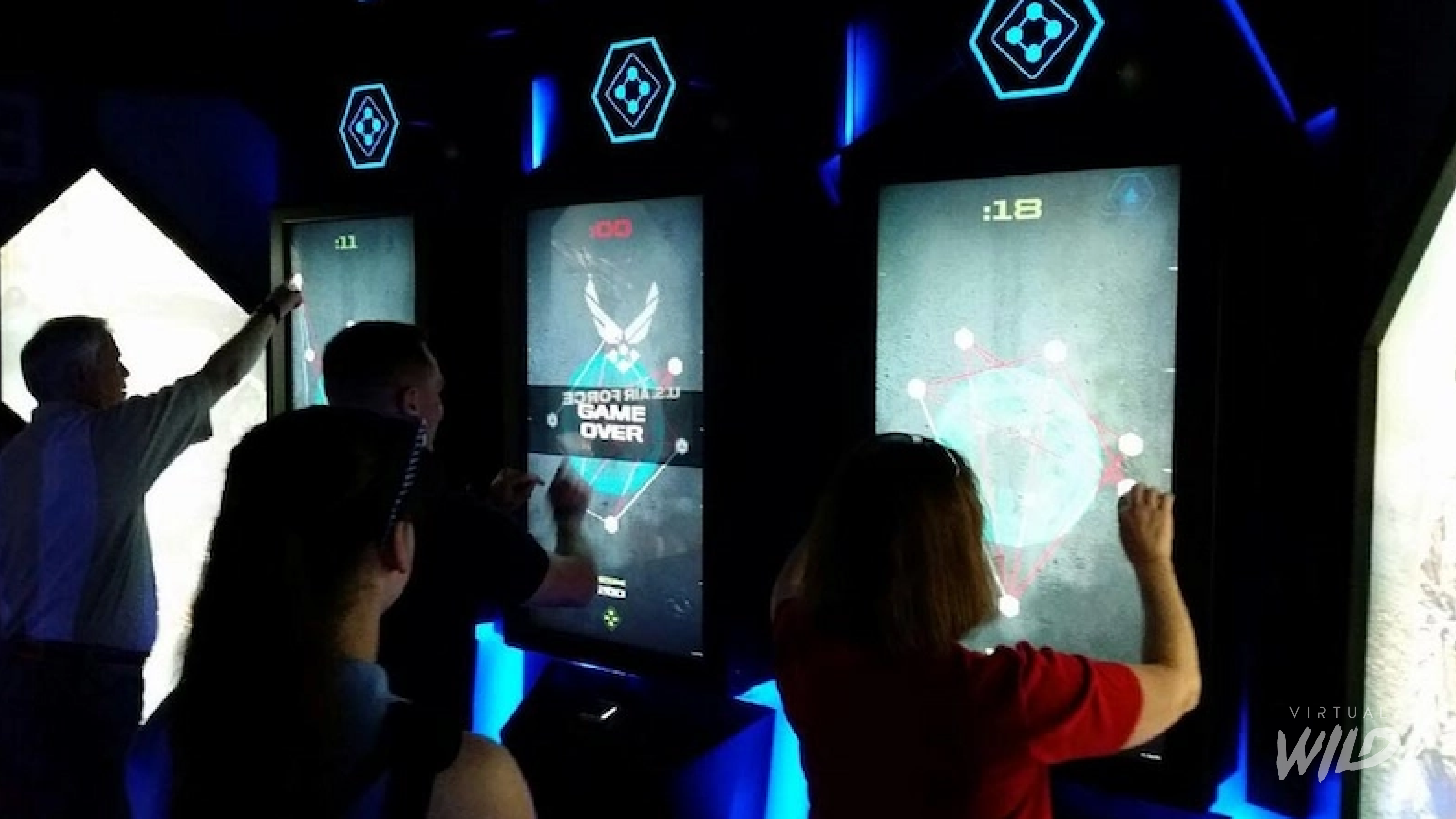
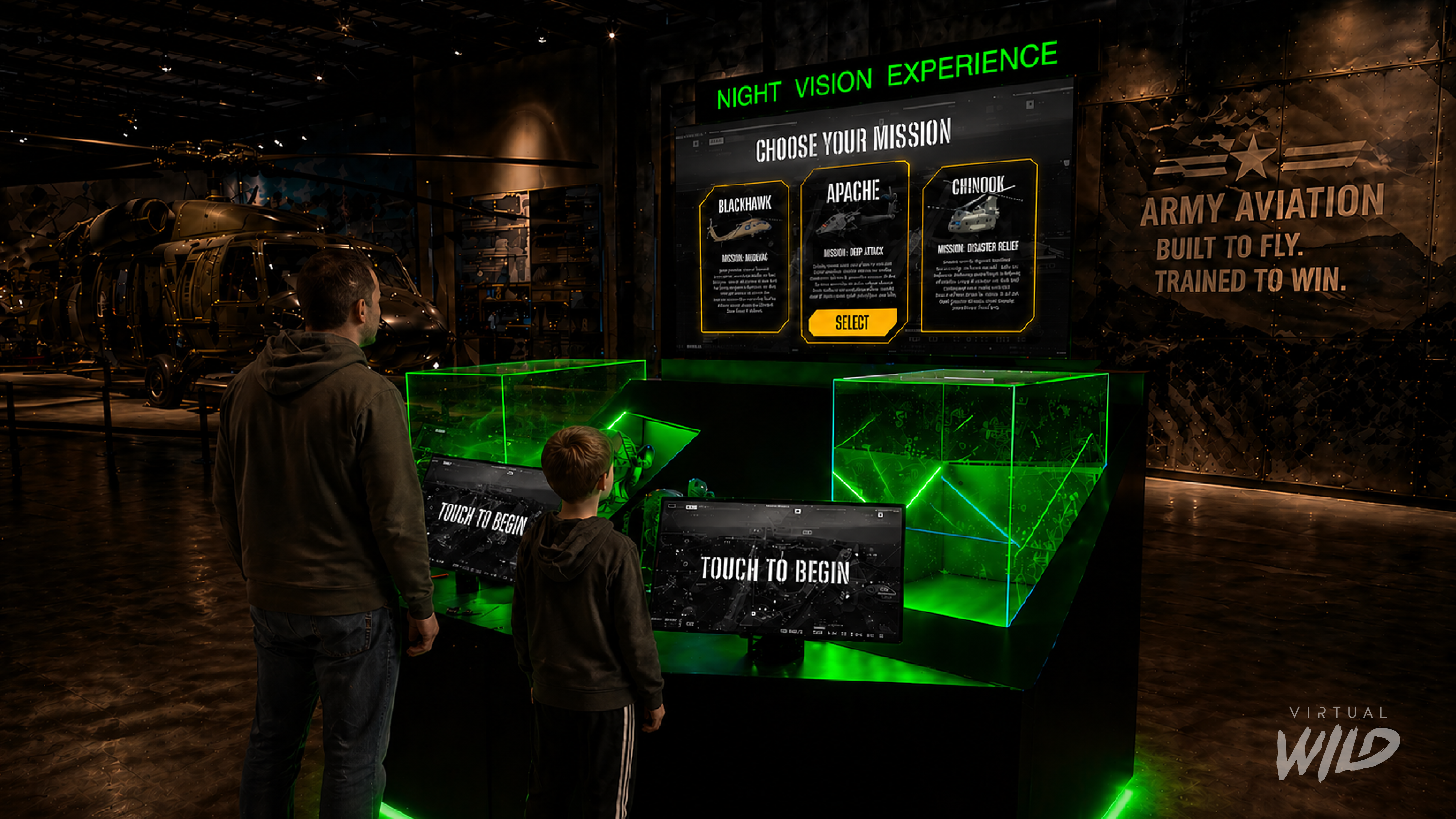
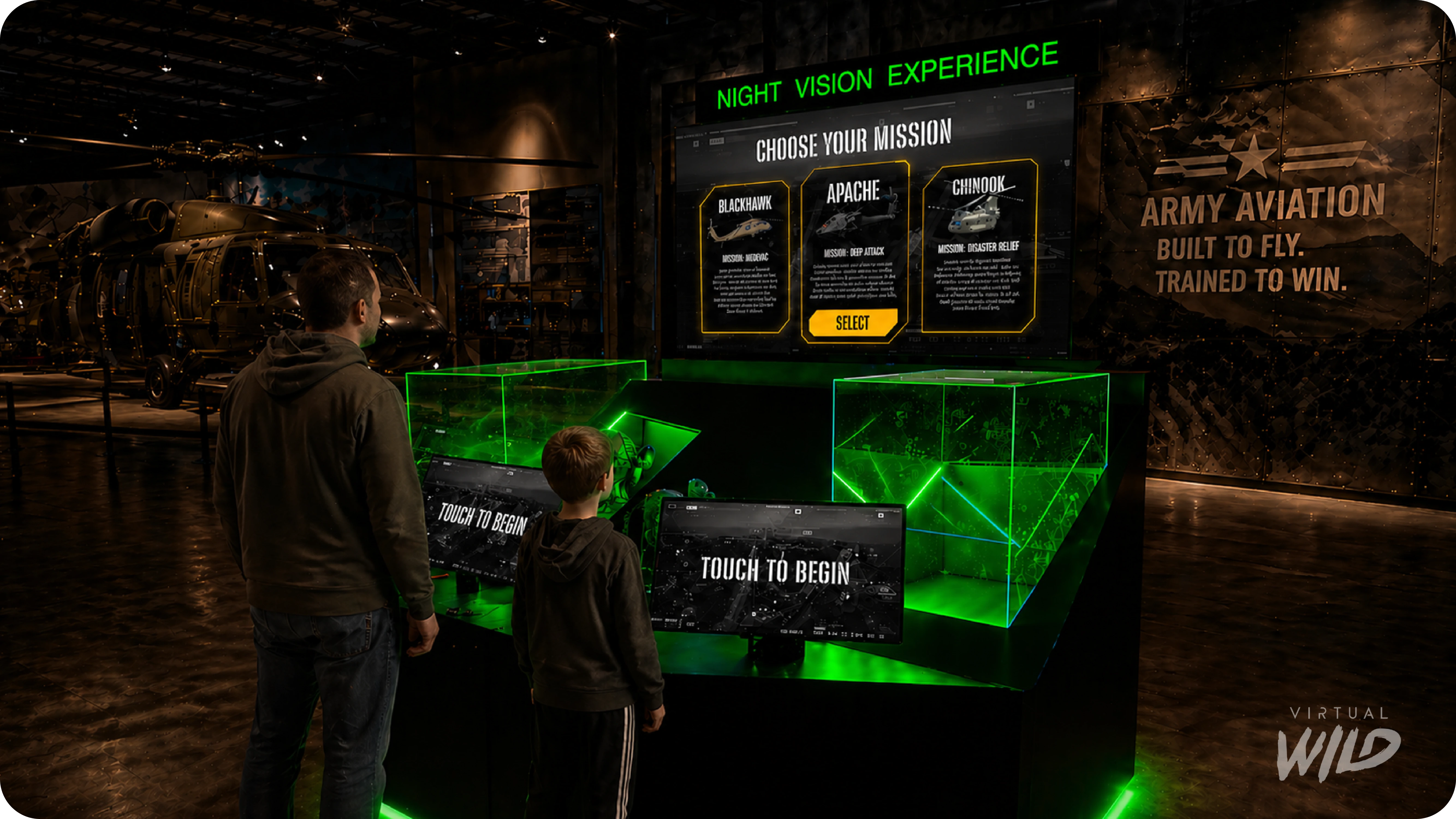

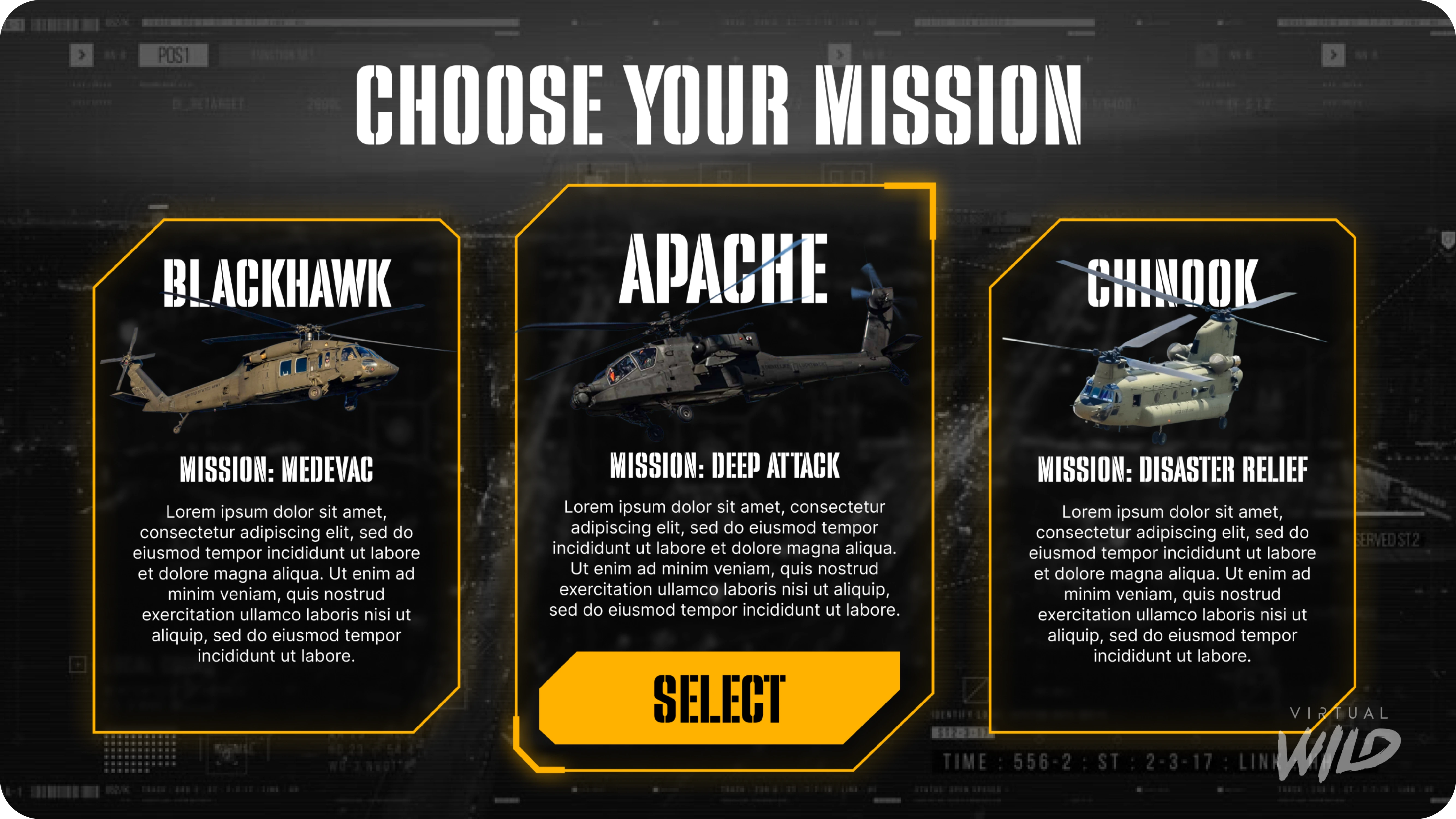
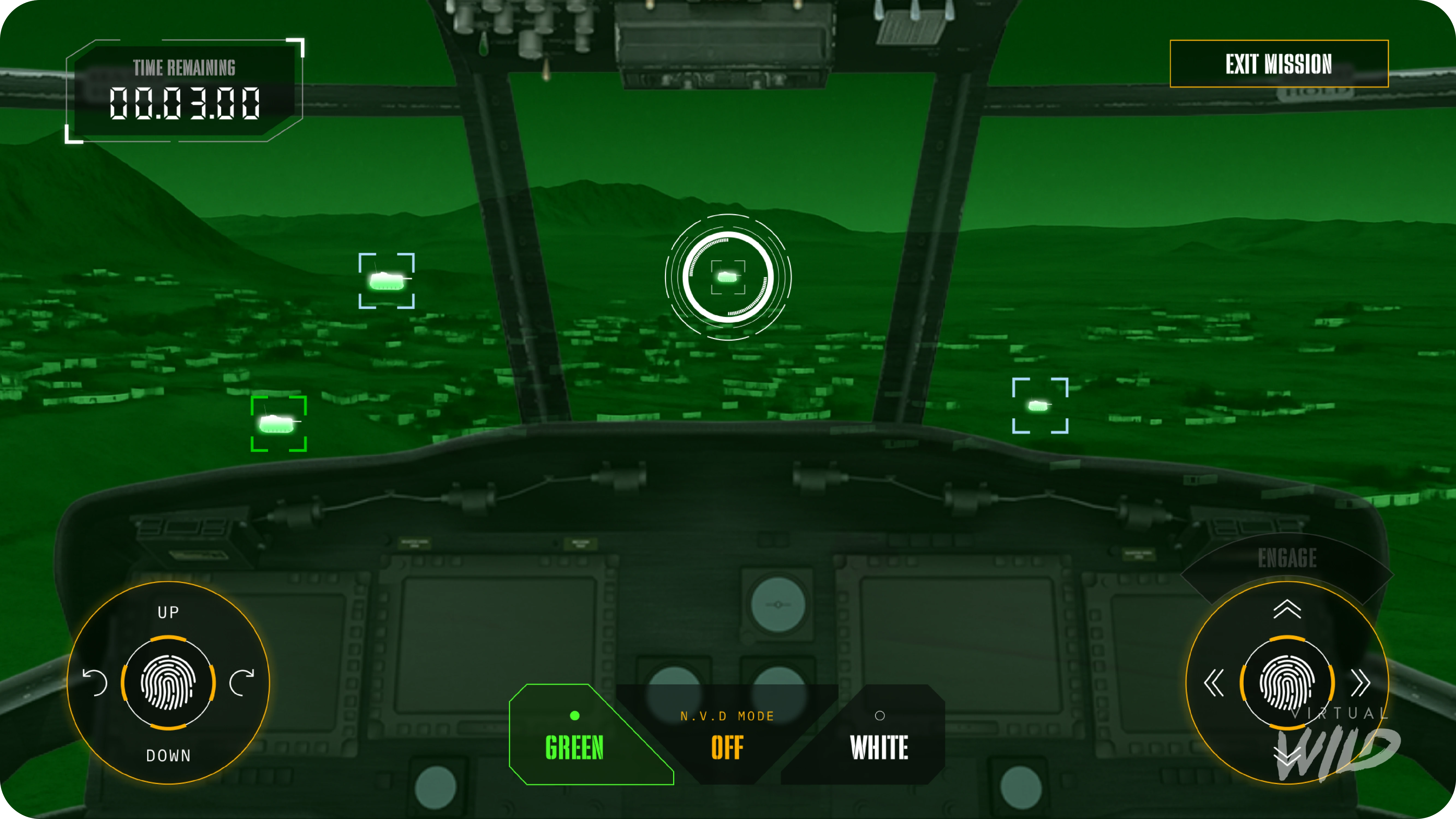
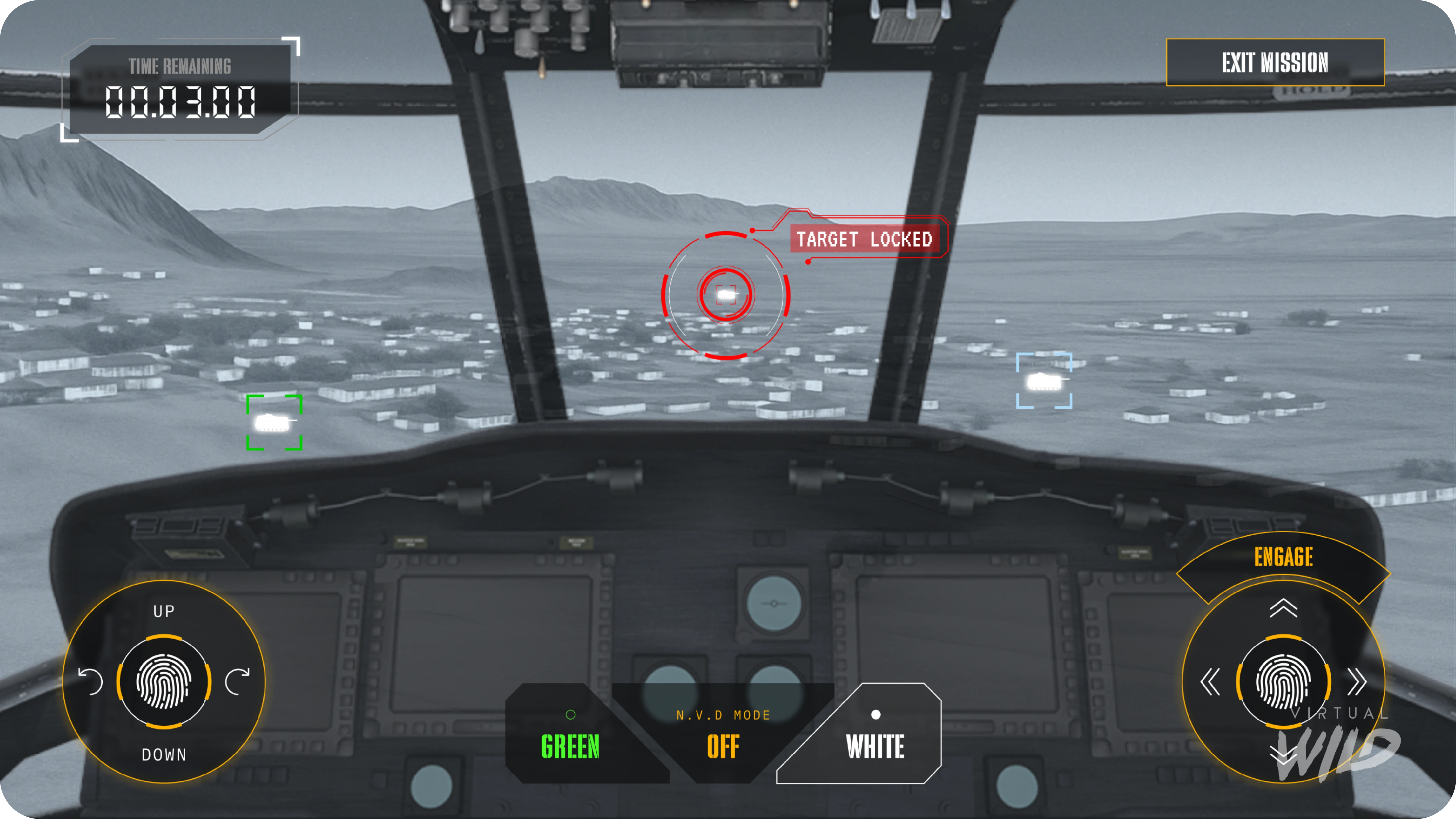
We designed a fast paced, arcade style helicopter game that introduces night vision technology through action. Visitors step up to three touchscreen stations, supporting both multiplayer and bot-assisted solo play to maintain a collaborative experience. Each player selects a call sign and chooses from one of three mission scenarios: Deep Attack (AH-64 Apache), Medevac (UH-60 Black Hawk), or Disaster Relief (CH-47 Chinook), each reflecting a real world application of Army aviation. The experience is built around a dual-perspective system. Players operate from a first person cockpit view on their individual screens, while a large shared display provides a real time map of the full environment, showing player positions, targets, and the broader mission space. This layered approach ensures no single player has complete visibility, naturally encouraging communication and coordination.
To keep the experience accessible, the interface draws from familiar arcade style gameplay. Controls are simplified, onboarding is minimal, and the visual hierarchy is clear, allowing players to jump in and begin playing within seconds. Rather than building a simulator, we focused on capturing the feeling of NVG flight by prioritizing responsiveness, clarity, and ease of use.
Visually, the experience blends arcade inspired design with subtle U.S. Army visual language to create something both inviting and authentic. The night vision system is treated as an interactive learning tool, allowing players to toggle between no vision, green NVG, and white phosphor modes during gameplay. This real time switching helps users understand how visibility changes and why it matters in real world scenarios.
From a development standpoint, performance played a key role in shaping the experience. The original concept featured a continuous world with multiple biomes, but running three gameplay instances on a single system required a more efficient approach. We restructured the experience into mission based environments, improving stability, clarity, and overall responsiveness.
The final installation is powered by three 27" touchscreen stations and a large 65" shared display, all synchronized through a system architecture designed for smooth, real-time multiplayer interaction.
An Experience That Sticks

The final installation delivers on its core goal. It gives visitors a real sense of what NVG flight feels like, and just as importantly, it is genuinely fun to play.
Visitors are able to step up, understand the experience, and begin interacting almost immediately without the need for instruction. The multiplayer design encourages natural collaboration, creating moments of shared interaction that reflect the teamwork found in real world Army aviation. The experience draws people in, making it just as engaging to watch as it is to play.
The mission scenarios resonate with a wide range of audiences, from general visitors to those with military backgrounds. The exhibit was well received by both the client and museum guests, successfully turning a complex technology into something intuitive, memorable, and engaging.