
Imagine approving a trade show booth before you've actually walked through it.
Signing off on a museum exhibit before a single wall has been built.
Exploring a retail environment before anyone orders materials.
For years, that's been the challenge. Design teams build beautiful renderings. Clients nod. Everyone crosses their fingers. And then fabrication starts. Gaussian Splatting changes that. It's one of the most exciting advancements we've seen in 3D visualization in years, not because it's a flashy new technology, but because it helps people understand ideas before they become reality. And if you've ever watched a client squint at a floor plan and say, "I think I get it," you'll understand why that's important.
What Is Gaussian Splatting?
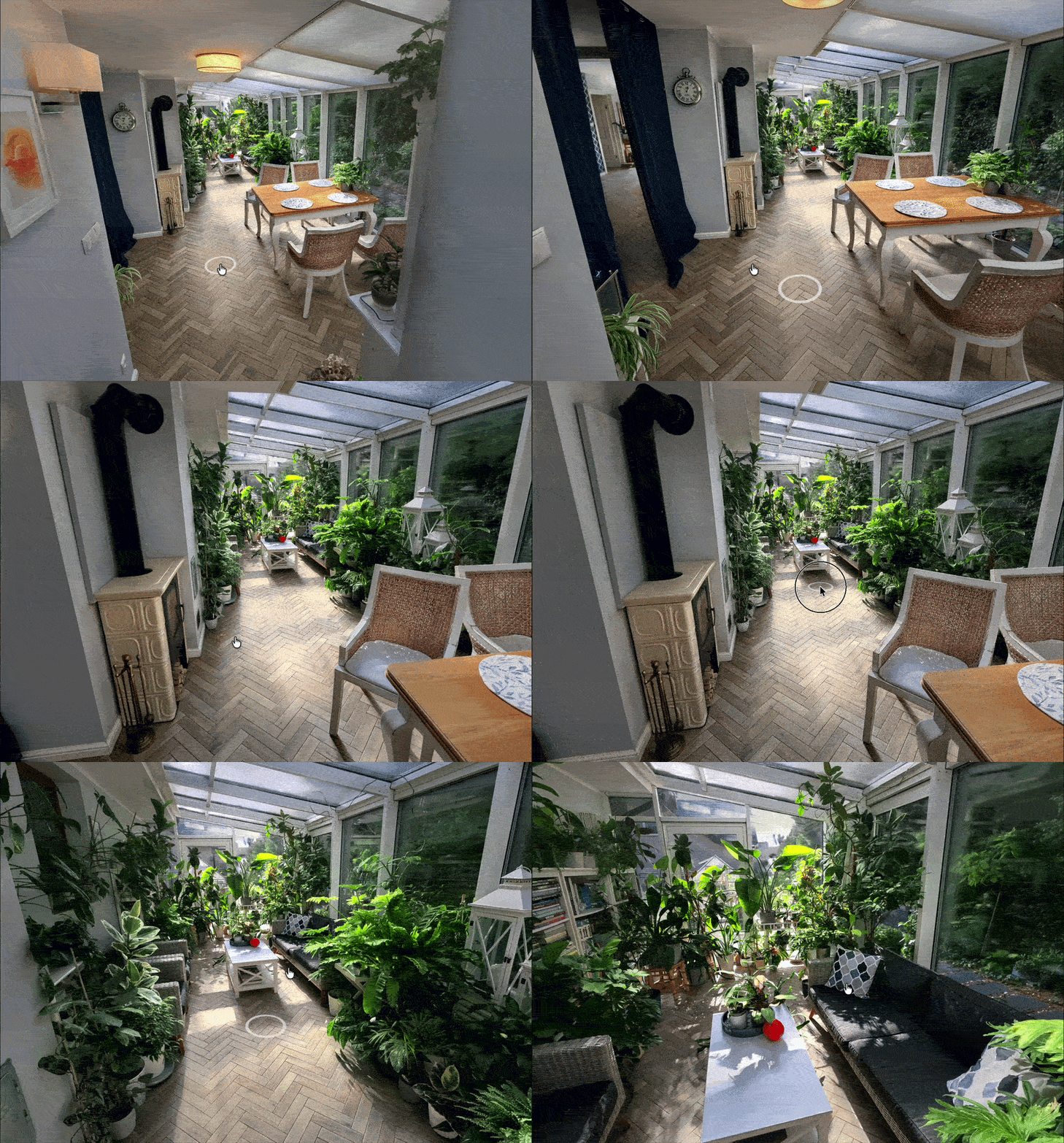
Let's get the technical definition out of the way. Gaussian Splatting is a method for creating highly realistic 3D environments that can be explored in real time, like a Google street view! Instead of building an environment using traditional polygons, textures, and lighting workflows, Gaussian Splatting represents a scene using millions of tiny volumetric points called Gaussians.
Sounds complicated. Thankfully, using it isn't.
What matters is the result. Spaces look incredibly realistic. Lighting behaves naturally. Reflections feel authentic. Tiny details survive the process. The final experience often feels closer to photography than traditional real-time 3D graphics. In other words, it doesn't look like a video game. It looks like a place.
Why Is Everyone Suddenly Talking About It?
Because for the first time, we're getting a compelling mix of realism, speed, and accessibility. Traditionally, there has always been a tradeoff.
You could have:
Great-looking visuals that took forever to build.
Or lightweight experiences that looked like they belonged on a computer from 2004.
Gaussian Splatting starts to close that gap. The technology allows us to create environments that look incredibly realistic while remaining lightweight enough to be viewed through a browser. That's a pretty big deal. Especially for industries where helping people understand a space is half the battle.
The Real Opportunity Isn't Scanning Reality
Most conversations about Gaussian Splatting focus on capturing existing spaces.
That's useful. But honestly? That's not the part we find most interesting.
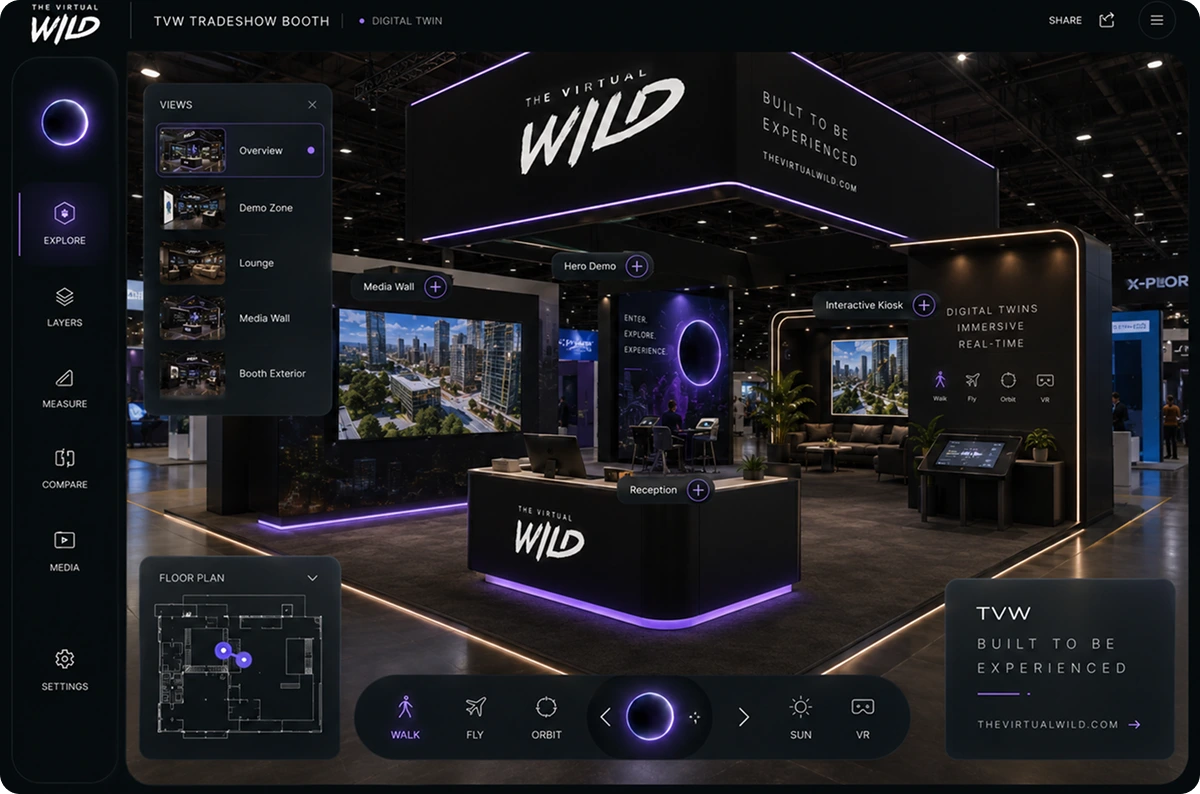
At The Virtual Wild, we're more interested in helping clients experience things that don't exist yet. A trade show booth before fabrication. A museum gallery before construction. A retail activation before installation. An experience center before anyone pours concrete.
Because let's face it:
Anyone can scan a room. The real challenge is helping someone understand the future. That's where we think this technology gets really interesting.
.webp)
Gaussian Splatting VS Photogrammetry
This is where things get confusing online.
People often use Gaussian Splatting and photogrammetry interchangeably. They're not the same thing. Photogrammetry is a process used to capture real-world spaces and convert them into digital environments. Gaussian Splatting is a way of representing and displaying those environments.
Think of it this way:
Photogrammetry captures reality. Gaussian Splatting helps present reality.
Or in our case:
Future reality. That's an important distinction. Because our clients aren't always trying to document what already exists. They're trying to communicate what comes next.
Gaussian Splatting VS NeRF
If you've gone down the Gaussian Splatting rabbit hole, you've probably also seen something called NeRF. NeRF, short for Neural Radiance Fields, helped pave the way for many of the advances we're seeing today. Both technologies create highly realistic digital environments.
The biggest difference is performance.
Gaussian Splatting generally renders faster and performs better in real-time applications. Which means it's often a better fit for interactive experiences, digital twins, and browser-based environments. And yes, we care about that. Because nobody wants to wait thirty seconds for a trade show booth to load.
Why This Matters For Digital Twins
The term "digital twin" gets thrown around a lot. Sometimes it means a 3D model. Sometimes it means a simulation. Sometimes it means a fancy buzzword someone put in a PowerPoint. At its core, a digital twin is simply a digital representation of a real-world environment.
The challenge has always been making those environments feel believable. Gaussian Splatting helps close that gap. The result feels less like viewing a model and more like exploring a place. That difference matters. People make better decisions when they understand what they're looking at.
And people understand things better when they can experience them.
Why This Matters For Trade Shows
Let's talk about our favorite use case. Trade shows.
Every exhibit starts with a concept. Then comes design. Then stakeholder reviews. Then fabrication. Then someone inevitably says: "I didn't realize it was going to feel this small."
With a digital twin powered by Gaussian Splatting, those conversations can happen much earlier. Clients can explore the booth before fabrication begins. Review traffic flow. Evaluate product placement. Understand scale. Test messaging locations. Experience the space before committing budget.
That's not just cool technology.
That's better decision-making.
Other Industries Are Paying Attention Too
Trade shows are only one application. Museums can preview exhibits before installation. Retail teams can test store layouts before construction. Architects can communicate designs more clearly. Manufacturers can explore facilities remotely. Sales teams can turn static presentations into interactive experiences. Anywhere people need to understand a space, there's potential.
And that's why we're seeing adoption accelerate across industries.

Why We're Excited About It
At The Virtual Wild, we've spent years helping clients understand complex ideas through immersive experiences, interactive technology, digital twins, and spatial storytelling. Gaussian Splatting isn't replacing those tools. It's becoming another tool in the toolbox. A really powerful one.
We're currently exploring how this technology can support trade show design, museum planning, experience centers, interactive product demonstrations, and web-based digital twins. Not because it's trendy. Because it solves a real problem. Clients make better decisions when they can experience an idea instead of imagining it. That's been true for years.
We're just getting better ways to make it happen.
A Quick Shoutout To The People Pushing It Forward
Innovation doesn't happen because someone waits for a trend report. It happens because curious people start experimenting. Much of our exploration into Gaussian Splatting has been driven by the work of our design and technology teams, who are constantly looking for new ways to help clients understand complex environments.
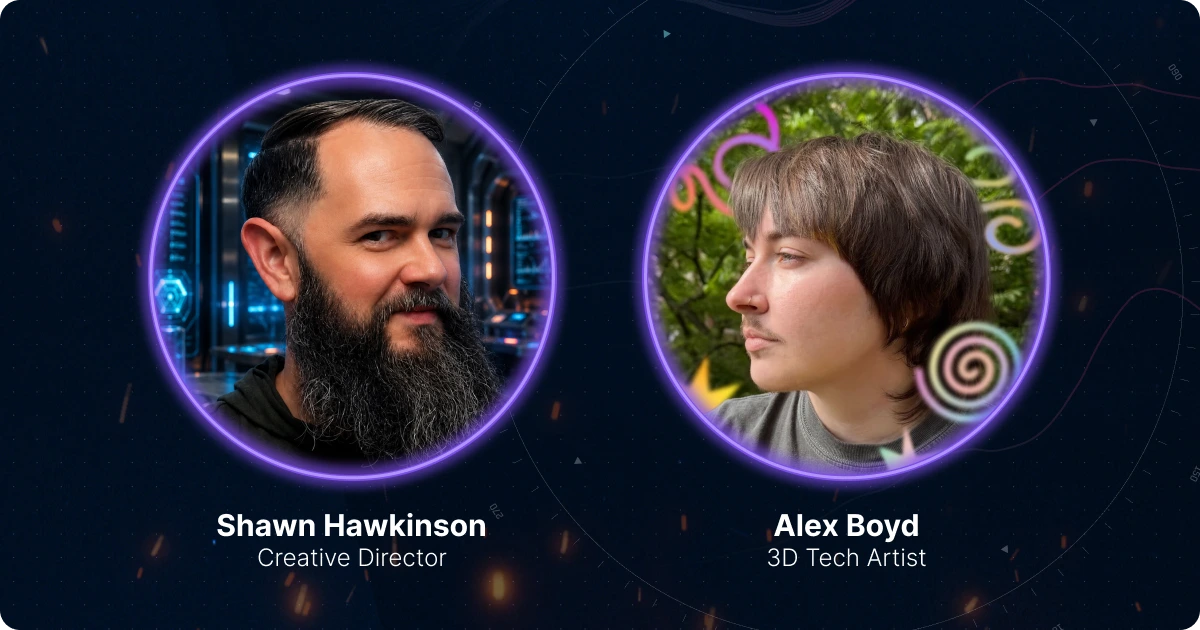
A special shoutout goes to Alex Boyd & Shawn “The Hawk” Hawkinson, whose curiosity, research, and willingness to push beyond traditional workflows have helped shape how we're thinking about digital twins, spatial experiences, and Gaussian Splatting at The Virtual Wild.
The technology is exciting. The people exploring it are even more exciting.
What's Next?
The honest answer? We're still figuring that out.
The tools are evolving. The workflows are evolving. The possibilities seem to expand every month. But one thing already feels clear. The future of visualization isn't static. It's interactive. It's immersive. It's accessible through a browser. And increasingly, it's about helping people experience ideas instead of simply looking at them.
That's a future we're excited to help build.
Ready to help people experience an idea before it exists?
Whether you're designing a trade show booth, museum exhibit, experience center, retail environment, or digital twin, our team creates interactive experiences that help stakeholders understand, evaluate, and engage with complex ideas.
Let's build something worth exploring.